Saturday, February 12, 2022

Controversial, Cancelled, and Critically Acclaimed: 8 More Graphic Novels Spiritually Similar to Maus

The following article was originally written for and published by the Grand Geek Gathering on February 9th, 2022.

In recent weeks you’ve probably heard a lot about the graphic novel Maus being banned.  In 1992, it became the first and only graphic novel to win a Pulitzer Prize.
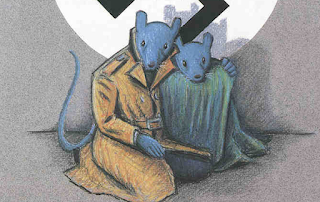


The school board of McMinn County, Tennessee, unanimously voted on Jan. 10 to remove the book from the eighth-grade curriculum.  The decision was made due to the book’s “rough, objectionable” language and a few images of nudity (including a few panels in which Auschwitz prisoners are stripped, and one where the author finds his mother dead in a bathtub from suicide).

Maus is the story of the author’s father, Vladek Spielgelmen, a Polish Jew and a Holocaust survivor.  Framed as a series of interviews between the author, Art Spielgelman, and his father, the comic explores both Vladek’s experiences leading up to the war and his time in Auschwitz, as well as Art’s complicated relationship with him.  In this way, the story isn’t merely about the tragedy of the Holocaust for the people who endured it but about its long-reaching effects on the children of survivors.

The story of Maus’s ban went viral, due in part due to Holocaust Remembrance Day falling a mere 17 days after the decision was made to pull the book from schools.  A public outcry launched the book to Amazon’s best seller list and resulted in tens of thousands of donations of the book to libraries and book clubs.


One high school student's response to the school board regarding the removal of Maus.

On the heels of this controversy, in what was presumably a backlash to the backlash, a Tennessee church organized a book burning for popular YA titles that “promote witchcraft,” including Harry Potter and Twilight.

Now seems like a good time not only to snag a copy of Maus but to explore some other controversial titles.  While the list of banned books is long, this article will focus specifically on graphic novels, ones that I believe hold similarities to Maus that make them both controversial and culturally important.  If you haven’t already, check out the following.

Barefoot Gen by Keiji Nakazawa

What It’s About: Published as a serial between 1973 and 1987, Barefoot Gen (Hadashi no Gen) is a semi-autobiographical account of a Hiroshima survivor’s experiences in 1945.

Why It’s So Controversial:  Told from the point of view of a 6-year-old boy, it’s been adapted into multiple movies (including a popular 1983 animation), but its depiction of post-war atrocities by Japanese soldiers resulted in a brief ban in some Japanese schools in 2012, which was later lifted.

Why You Should Read It: Like Maus, this book is a firsthand account of war experienced, and specifically the (literal) fallout of war as it impacted a child and a civilian.  Especially for Americans, the devastating effects of the decision to drop a nuclear weapon on Japan in 1945 should be reflected on with a critical eye.  Nakazawa’s widow, on the ban, stated: “War is brutal. [Barefoot Gen] expresses that in pictures, and I want people to keep reading it.”  It’s worth noting that this manga influenced Art Spielgelman himself.

Persepolis by Marjane Satrapi

What It’s About: Another book focused on a child experiencing war, this graphic memoir tells of a 10-year-old girl’s coming-of-age during the Islamic revolution in Iran during the 1980s.

Why It’s So Controversial:  Persepolis has sold over two million copies worldwide, and also snagged a top spot on ALA’s list of "Top Ten Most Challenged Books of 2014.”  It doesn’t shy away from topics such as the main character’s budding sexual growth, nor of violence under the fundamentalist Islamic regime of Iran in the 1980s, including such imagery as a dismembered soldier and descriptions of torture.

Why You Should Read It:  A complex depiction of cultural identity and feminism, this book challenges both Eastern and Western assumptions about freedom and expression.  Satrapi’s exploration of her own Islamic and Iranian identity isn’t black-and-white; it challenges the idea that religious expression is inherently oppressive while also condemning state-sanctioned violence in the name of religion.

American Born Chinese by Gene Luen Yang

What It's About: Three interwoven stories explore cultural identity: one parable tells of the Monkey King trying to fit in with other gods, one story tells of a young immigrant boy Jin struggling to integrate, and the third follows a white American who is embarrassed by his Chinese cousin.  The three stories come together in the end (no spoilers!) and focus on the idea of accepting one's differences and embracing one's identity in the face of racial pressure to integrate.  Published quite recently, in 2006, this book is the only one on the list that is fully fictitious, but its themes and broader concepts are very much based in reality.

Why It's So Controversial: By design, Danny's Chinese cousin Chin-Kee is a massive racial stereotype (and his name is a slur).  He's meant to make the reader uncomfortable and to show how slurs and caricatures are harmful.

Why You Should Read It: This graphic novel snagged a Harvey, Eisner, and Printz Awards within a year of its publication.  It was also on Booklist's Top Ten Graphic Novels for Youth, a Time Top Ten Comic of the Year.  But perhaps most importantly, it was given the 2006/2007 Best Book Award from The Chinese American Librarians Association, who found its messages about the struggle with ethnic identity resonated very strongly with its target audience.  Seeing the world from the perspective of a non-white immigrant offers an often-overlooked viewpoint that many readers need to be exposed to.  Unrelated to the book, the author joined the board of directors of the Comic Book Legal Defense Fund, in 2018.  This non-profit has worked since 1986 to protect the First Amendment rights of comic book creators, which is critically important, especially as it pertains to "obscene" material.  (Note that many of the books on this list have been condemned as "obscene" or "pornographic" in an attempt to get them censured.)

Blankets by Craig Thompson

What It’s About: As long as we’re talking about religion, why not chat about Christianity?  An autobiographical tale of a boy being raised in an Evangelical Christian home and coming to terms with his spiritual identity, this work snagged multiple Eisner, Harvey, and Ignatz awards.

Why It’s So Controversial:  Needless to say, it also came under fire from states in the Bible belt, which tried to ban it from libraries on account of its “pornographic” depictions of the main character’s sexual abuse at the hands of a babysitter.

Why You Should Read It:  This work was read and praised by Art Spiegelmen for its unflinching personal narrative describing the ways in which the author’s fundamentalist religious upbringing resulted in harm.  It’s a first-hand account of the ways religion can be warped into something dangerous and oppressive and, like Persepolis, it centers its message on the author’s personal coming-to-terms with his own spirituality.

Fun Home: A Family Tragicomic by Alison Bechdel

What It’s About:  Another autobiographical graphic novel, Fun Home spent two weeks on the New York Times’ Best Seller list.  An exploration of the author’s discovery that she was a lesbian, her coming out, and her father’s suicide (and whether these subjects are related) is explored earnestly, with commentary on gender roles, family dynamics, and mental health.

Why It’s So Controversial:  Needless to say it’s faced multiple challenges because of the subject matter concerning sexual identity, along with mature themes like the author’s father’s suicide and her own struggles with suicidal ideation.  Certainly, a parallel could be drawn between Maus’s own parental suicide themes.

Why You Should Read It: Like Persepolis and Blankets, this is a coming-of-age novel that frankly discusses a teen’s sense of fitting into a world.  To say it’s “too mature” for teenagers is to deny the fact that teenagers experience these feelings and live in the real world.  The author’s adolescence in rural Pennsylvania is not necessarily a unique situation and it’s important for our society that teens be exposed to this reality: both for those who are experiencing it themselves, so that they know that they aren’t alone, and for those who are not experiencing it, so that they can learn empathy for those who aren’t like them.

The Color of Earth by Kim Dong Hwa

What It’s About:  The first of a trilogy (the other two being The Color of Water and The Color of Heaven), this book is another coming-of-age story of a girl turning into a woman.  The author uses his mother as the main character, and imagines her blooming womanhood in a series of discussions about sex, puberty, and relationships with her own mother, as well as through allegory in her interactions with her surroundings.

Why It’s So Controversial: This book made both the 2011 Most Frequently Challenged Books List and Booklist’s 2010 Top Graphic Novels for Youth List.  It includes depictions of nudity and sex; though often metaphorical, the presence of these “mature” themes has made the book banned in many teenage curricula for its “pornographic” nature.

Why You Should Read It: Similar to Persepolis and Fun House, The Color of Earth is an honest look at the experiences of a young woman and her growing understanding of the world around her.  A desire to “protect” young women does them the disservice of having open and necessary conversations about sexuality and self-expression, which makes them more vulnerable to abuse.  But unlike Persepolis and Fun House, The Color of Earth is not about a woman’s oppression but, instead, reads as a sensitive dialogue of a curious young woman who is given the necessary instruction and explanations of womanhood by a supportive parent, making it a refreshing take on female maturity.  This book has also received praise by Art Spiegelman.

Pride of Baghdad by Brian K. Vaughan and Nico Henrichon

What It’s About:  We turn our attention now from stories of people to stories of animals.  Pride of Baghdad is a fictionalized version of a real story.  In 2003, an American bombing of Baghdad resulted in four lions escaping the zoo; this graphic novel follows the pride of lions as they navigate through war-torn Baghdad.

Why It’s Controversial: This one-shot, published by Vertigo in 2006, won the IGN award for best original graphic novel the same year.  Its gory depictions of war and a rape scene have led to its censure.

Why You Should Read It: Its frank discussions of the tragedy and consequences of war make it a necessary read.  Each lion comes to a different conclusion about the nature of man and the consequences of war, delivering nuanced and refined opinions that challenge the reader to reconsider how they feel.

Additional Reading: Also by Brian Vaughan is Saga, a story following a pair of extraterrestrial refugees with a baby.  Saga was removed from the Apple App Store due to homosexual scenes and “anti-family values,” a curious argument when one considers that it’s literally about a family of refugees trying to navigate a war-torn environment.  Deeply allegorical, this epic sci-fi opera lives up to its name, and has, to date, won a dozen Eisners, seventeen Harveys, and the 2013 Hugo Award for Best Graphic Story.

Sheriff of Babylon by Tom King and Mitch Gerads

What It’s About: As long as we’re talking about war in Iraq, let’s take a moment to consider this 2015 Vertigo title.  Sheriff of Babylon is a murder mystery / noir story set in Iraq, and draws heavily from the author’s experiences in 2004, where he worked in Iraq as a counterintelligence officer for the CIA.

Why It’s So Controversial: With a lot of moral gray areas and violent imagery, it’s a good companion for Pride of Baghdad.

Why You Should Read It: Like Pride of Baghdad, this unshrinking tale gives a very real and raw depiction of war in a way that humanizes the characters and forces the reader to consider the consequences of war as it affects civilians.

One of the common features of all of these works is that, like Maus, they are either autobiographical, or based in reality (i.e., “historical fiction,”).  These are first-hand (or heavily researched) accounts of real situations or lived experience.  These are historical, living documents that focus on real characters (some more real than others, of course; American Born Chinese being an exception) that are living in the same world as us.

If children are old enough to experience war, racism, sexual abuse, family tragedies, and identity crises, then they are old enough to read about them.  By banning or censoring books deemed “too mature,” we are robbing readers of the maturity they are growing into, and holding them back from developing the empathy, critical thinking skills, and knowledge necessary to navigate these murky waters.

Ultimately, it’s true that not all books will be appropriate for all readers, but that decision should be made by the reader (or the reader’s parent), not a third-party entity, and certainly not a governmental one.

For further reading, I would like to submit a few highly controversial honorable mentions that, while purely fictitious, seem appropriate when discussing the topic of censorship:

Watchmen by Alan Moore and Dave Gibbons 

The first major deconstruction of the superhero genre that would later give rise to concepts like The Boys and Invincible, this graphic novel includes anti-Reaganist themes, commentary on power politics, and nihilistic viewpoints on the subject of “protective” elites and “nanny state” affairs.

Kingdom Come by Mark Waid and Alex Ross

A little more couched in DC lore, Kingdom Come is another exploration of divisions of power, and on the question of to what extent people should be allowed to govern themselves.  It challenges the notion of vigilantism as inherently heroic, as well as the oft-overlooked superhero trope that some people are inherently better than others, that governance is deterministic, and that egalitarianism is against the “natural order” of things.

V for Vendetta by Alan Moore and David Lloyd 

What better time is there to snag a copy of V for Vendetta?  Set in a near-future dystopia in which a fascist government has seized control of Britain, V for Vendetta follows a revolutionary as he tries to bring down the state.  Since the 2005 movie adaptation and the rise of the use of the Guy Fawkes mask by various protestors, it’s easy to forget what an incredible (and sadly predictive) book this was.  Controversial for its violence and its main character’s endorsement of anarchy, the arguments against facism and its anti-censorship, pro-free speech themes make this a timely book in a time when book burnings are happening.

Now, more than ever, it’s critical that we protect our right to access material that might be deemed shocking, offensive, or, as the Tennessee school board said, “objectionable,” particularly when that material seeks to educate people on controversial subject matter for the sake of uplifting minority rights and preventing tragedy, as so many of these titles do.  So if you’re going to grab a copy of Maus, go ahead and snag a few of these others.

And for further reading, don’t forget to check out Jeff’s Picks, a weekly series that focuses on indie comics that all too often fly under the radar.

Friday, February 4, 2022

Content Dump: Interview With A Really Cool Hawkeye Cosplayer

Last Friday I had a really fantastic interview with Trevor Newton, the Hawkeye cosplayer I met at L.A. Comic Con.

If you recall, this was the (sole) highlight of my time at L.A. Comic Con and it came at a really difficult time for me.  I had mentioned to Trevor I was an entertainment journalist and was interested in interviewing him, but then, with the move and everything else, I promptly forgot to reach out.

Later, on Facebook, I bumped into him (virtually) in a cosplay group, and he not only remembered me but asked if I was going to make good on my promise to reach out to him.  I took the invitation and we ended up talking for almost two hours.

Interviews are a love-hate format for me, because I struggle to tell another person's story in their words and to capture their voice in a way that honors them.  I was particularly stressed about this interview because of how gracious Trevor had been with his time and encouragement.  I ended up reaching out to one of my writing partners to take on the role of editor and help me polish the article up to something I wouldn't hate, and it turned out pretty good.

Despite feeling some burn-out, pushing myself to write and managing to grind out some halfway decent work leaves me feeling really fulfilled.

Shot In the Dark: Hawkeye Cosplayer Trevor Newton Stumbles Into The Spotlight
 

Sunday, January 30, 2022

Abandonware: An Example of Why Copyright Law Should Be Revised

Over the last week I fell down a nostalgia rabbit hole.

I'm not really sure what prompted it.  I think maybe it was a post like this.


The joke is that the last name "Cooper" is the occupation of making barrels.

This piece of random, possibly useless historical trivia is something I learned from a game called "Carmen San Diego's Great Chase Through Time," and I haven't thought about that game in about 20 years, but I've retained an absolute ton of knowledge from it.  Looking back, I can say with a degree of confidence that it was my favorite "learning game" of my childhood.  A simple click-and-point adventure with a linear plotline, it was something of an interactive TV show that takes the user on a journey through history.

I wanted to play it but discovered, to my disappointment, it's not something easily found.  In fact, it's what's called "abandonware," a term for software that has been functionally given up by the creator and no longer has any type of official support.  Abandonware is similar to the poignant concept of an "orphan work," which is a copyrighted work whose owner is impossible to identify or contact, rendering the work stagnant because there's no one available to grant permission for the work to be rebooted, digitized, or otherwise "borrowed" (with the exception of fair use, of course.)  

 I found this entire situation fascinating: the idea that a work can be created, abandoned, and then, due to its copyright, fossilized into something that functionally ceases to exist and cannot be resurrected.  Particularly with regard to Carmen San Diego's Great Chase Through Time, I found this to be a good example of why copyright law should probably be reformed.  As someone who writes a copious amount of fan fiction, some of which doesn't even suck, I hate the idea of stamping an idea with a big "DO NOT USE" sticker and then letting it languish.


Anyway, I ended up finding several YouTube videos of play-throughs of Carmen San Diego's Great Chase Through Time and watching hours upon hours of someone else playing with the use of an emulator, and wrote up an article about this great little game.

Read my article about this 25-year-old game here!  It's fair use, maybe!

If the goal of the game was, ostensibly, simply to teach kids about history (and not just to make bank), then I feel like this game should absolutely be resurrected and made available.  It has so much merit; it's exactly what an educational game is supposed to be.  It's fun, it's clever, it's chock-full of puns and historical trivia, and perhaps most incredibly, a lot of that trivia stuck with me in adulthood, which shows just how effective the game was at teaching.  It's not just that the game provides knowledge but that it demonstrates how to make a really good learning game, which is a white whale that a lot of software developers still struggle with.

Letting a meritorious piece of work fade away because of a legal complication does a disservice not only to its creators (who gain nothing by letting it die), but to all those who would benefit from exposure to it.

I guess the case I'm making is that everyone should start writing Carmen San Diego fan fiction or something.

Wednesday, January 26, 2022

I accidentally made a green bean casserole that tastes exactly like sausage pizza. Here's the recipe.

I am no great shakes in the kitchen.  I'll say that right now.


But I really like green bean casserole, which is easy to make.

Recently I made it and it turned out GREAT.  I mean, GREAT.  It had an odd similarity to sausage pizza so, before I forget, I'd like to write down the recipe here so that future generations may enjoy it:
 

1.  To start, you'll need to vaguely remember Campbell's green bean casserole recipe.  Stop!  Don't click on that link.  You remember the recipe well enough probably, so you're ready to rock and roll.  You should have 4 cans of green beans and 2 cans of condensed mushroom soup to start with.
 

2.  Drain the green beans and mix the green beans and the soup into a standard casserole pan.
 

3.  Next, realize that you don't have any of the French's fried onions.  Shit.  You're going to have to improvise.  Uhh... goldfish crackers!  Those are crunchy and orange!  Crush up a cup or two of those, mixing it into the pan until it looks vaguely like you think it's suppose to.  (Pro hint: use your index finger and thumb to "pop" each goldfish cracker into crumbs.  This is good stress relief.)

4.  Now for a dash of soy sauce.  Shit, you're out of that, too.  Time to find a substitute.  Balsamic vinegar looks like soy sauce.  Wave the bottle over the pan; you've put in more than a "splash," but that's okay.  Be sure to mix it in!  This will change your mushroom soup base from an unappetizing light tan to an unappetizing slightly darker tan.


5.  Alright.  Seasoning time.  You moved last month and most of your spices are still wrapped in cling wrap.  Now is a good time to pre-heat the oven, since you're struggling to liberate the spices from the cling wrap.  Put it at... 450° F?  Yeah, that sounds about right.


6.  Okay!  You can't find the seasonings you want and you sort of forget what the recipe calls for, though you have a vague notion there's garlic and celery seed, so just grab the one the says "Cajun."  It includes garlic and celery seed.  I checked the label, and here's what's in "Cajun": Salt, paprika, red pepper, thyme, black pepper, celery seed, garlic, and onion.


7.  You should not have learned your lesson from step 4.  Wave the seasoning bottle over the pan like you're Vision trying to measure out a "pinch" of paprika.  Is it over-seasoned now?  Probably!  Well, no time to try and fix it.  Just mix it all up and put it in the oven.

8.  Is it still pre-heating?  Hm.  Well, the dog needs walked, so you might as well do that.  Pop the casserole into the oven; can't hurt to get started!


9.  Okay, you came back from your walk and the oven is at 450.  The casserole inside is bubbling.  You really should have set a timer.


10.  Check on the casserole nervously a few times.  It's still bubbling.  Fish the soup cans out of the recycling to see if there's any warnings about under-cooking it.  Nope, you're good.  Well, as long as this disaster doesn't give anyone salmonella...

 
11.  When you open the  ̶o̶v̶e̶n̶  furnace you will realize that 450 is definitely way too hot.  Oh, God.  Oh, God! Turn it down to 380!


12.  It's still bubbling.  It's been 20 minutes, maybe?  You have no idea.  You've lost all sense of time while you were peeling oranges for your toddler.  The goldfish crackers will have a brownish singe; you worry you might have burned it.  Turn off the oven and leave the door open so it can cool.


13.  Poke it.  It should be very slightly congealed, enough to hold shape and be cut into squares.  Leave it to cool for 10 or 15 minutes while you despair that it probably sucks.  


14.  Congratulations!  Your disaster casserole is finished and somehow... it actually tastes really good??  Well, butter my ass and call me a biscuit! 

Note: Although this is a joke recipe, it actually really worked.

Sunday, January 16, 2022

I Tried Kava And You Should, Too

Originally written for the Grand Geek Gathering and posted January 12th, 2022.  View here.

 I recently visited a kava bar.  A kava bar is sometimes referred to as a “nakamal,” which is a Vanuatu public house.  I wasn’t in Vanuatu, but Oakland, California, and I had never heard of kava before, which is what MeloMelo Kava Bar serves.

Having tried it, I’m going to make a prediction: Kava is going to be a big new craze in the coming decade.  I’m not the first; in 2018, Rolling Stone made the same prediction.  Alas, they could not have predicted the Covid-19 pandemic, which stalled the growth of a lot of new businesses, and in particular, restaurants and bars.

As a result of the pandemic, 2020 saw a big upswing in both anxiety and alcohol consumption, which in turn prompted a big upswing in “dry” bars and a counterculture of consuming non-alcoholic or alcohol-alternative substances.  Kava is the perfect fit for those who want to experience the fun of a bar without the side effects of alcohol, and for those who are looking for a natural remedy for anxiety.

If you’re seeking a new experience, look no further than kava.  I tried it, and you should too.


(Raw, unprepared kava root.)

So what is kava?

Tl;dr – Kava is an earthy drink that gives you a very gentle euphoric buzz.

Kava has been consumed by humans for millennia.  It’s the root of a plant called Piper methysticum, a relative of black pepper.  This plant is native to islands of the south Pacific.


Kava is a seedless plant that requires human cultivation to propagate.

It goes by many names: yaqona is Fiji, ava in Samoa, and ‘awa in Hawai’i.  There are many varieties.  Kava is the name used on Vanuatu, which is where some believe it originated.  There are over a hundred varieties, which can be roughly categorized into “noble” kava or “tudei” (two-day) kava.

The root of kava is crushed and mixed into a drink that tastes earthy and ashy.  The mild psychoactive ingredients found in kava are called kavalactones. There are 18 different kavalactones in kava, with six being the most important, and every variety has different concentrations and combinations of kavalactones.  In fact, the profile of the six kavalactones acts as a sort of “varietal fingerprint” for each plant.  (Melomelo kava bar, for example, gets its name from the “Melomelo” variety of kava, from Ambae Island.)


Powdered kava root.

Kavalactones are thought to act as GABA agonists and reduce the re-uptake of norepinephrine. (* See correction.)  As expected from a GABA agonist, this results in a calm, sleepy, mildly euphoric effect.

In short, it gets you high.

Kava is not regulated at any state or federal level, which is fascinating, considering it’s psychoactive.


Kava being strained into its drinkable form.

How does it taste and feel?

As I mentioned, Kava has an earthy, ashy, slightly “muddy” taste.  You can mix powdered kava into any drink (don’t do it with alcohol, please!) but traditional kava is simply made with water.  Served in a polished coconut shell called a bilo, it has a murky, brownish-grey color.

Upon swigging it, the first thing I noticed was that my mouth went pleasantly numb.  You know the feeling when you get Novocain at the dentist and, hours later, it’s wearing off with a gradual tingle?  That’s a bit how this felt.  It’s a pins-and-needles feeling that’s soft as opposed to prickly, and I found it enjoyable.


Kava in bilos.

On my first visit, I consumed three drinks, which left me feeling relaxed and friendly.  Everyone’s “tolerance” for kava is different, but as a general rule of thumb, it takes about 20 minutes to feel any effect and that effect lasts maybe two or three hours.  This was my experience.

I have heard it compared to weed, but I am allergic to cannabis (yes, really) so I can’t really tell you how they compare.  I do have a Xanax prescription and have also heard it compared to anti-anxiety medication, but I found it to be far, far milder than any anti-anxiety medication I’ve ever tried.  Certainly, it had the calming effect of anti-anxiety medication, but there was none of the clocked-out grogginess.  I felt perfectly alert and present, just calm.

Unlike alcohol, kava is not addictive and has no risk for overdosing.  After I tried it, I walked home from the kava bar and had a fantastic sleep.  The buzz is the mildest of buzzes; it’s the feeling of going to a really fun party and meeting really cool people you immediately click with.  (At kava bars, everyone “clicks” with everyone else.  Friendliest folks you’ll ever meet.)

It’s no wonder kava has such a long history of ceremonial and social importance.


Traditional kava ceremony in Fiji.

What’s the history?

Kava has an incredible culture that surrounds it.  Kava is the national drink of Fiji.  It’s so important to their culture that it’s featured on their one-cent coin.

In pre-colonial Fiji and Vanuatu, kava was consumed by male priests, chiefs, and elders; the ceremonies were often used to welcome visitors and open up trade between tribes.  Colonizers called the drink “grog,” a term you might have heard in old sailing books and assumed (incorrectly) that it referred to rum.  Nope.  Kava.

The kava-drinking ceremony (called yagona in Fiji) is now a major tourist attraction for the islands and open to more than just male elders.  Participants clap once before drinking the kava, exclaim “bula!”, and clap three times afterwards.  (Bula, pronounced “boolah,” translates literally to “life” and is used as both a greeting and as a way to express a wish for another’s health.  In other words, it’s “L’chaim!” or “Cheers!”)


Women Preparing Kava, by John La Large, 1891.

It’s easy to fall down a rabbit hole when researching kava’s historical importance, and I ended up spending three or four hours reading about it before determining that I simply do not have the expertise required to tell you about kava’s history.

I will direct you instead to Kava: The Pacific Elixir, by Vincent Lebot, or to the Wikipedia page on Kava culture, or to the Kalm with Kava culture page, all of which delve into some of the ways kava shaped, influenced, and impacted various Oceanic cultures.

Learning about something like this made me feel humbled by just how little I knew about Fiji and Vanuatu.  For whatever reason, kava hasn’t yet caught on in Western culture, although it’s getting there, and I did find this ad for it in a 1915 Sears catalogue.

According to Kalm with Kava, there are currently just under 200 kava bars in the United States, and that number is growing.  (It’s nearly doubled since 2018.)

Is Kava safe?  

When people hear the word “psychoactive” they tend to immediately grow concerned (or excited, depending on who it is).  Kava is a suspected GABA agonist, just like alcohol, barbiturates, and benzodiazepines. (* See correction.)

But unlike most drugs, kava is, by all accounts, one of the safest psychoactive things you could possibly consume.

According to a statement by the World Health Organization, ““Kava has had at least a 1500-year history of relatively safe use, with liver side effects never having arisen in the ethnopharmacological data. Clinical trials of kava have not revealed hepatotoxicty as a problem. This has been confirmed by further studies evaluating the toxicology of kava drink. Based on available scientific information it can be inferred that kava as a traditional beverage is safe for human consumption.”


These 6 kavalactones make up 95% of the psychoactive properties of kava, but every variety has a different ratio.

It’s recommended not to combine alcohol and kava, or kava and other psychoactive drugs, because the effects can compound and kavalactones are highly interactive with other drugs.  You definitely shouldn’t drive on it due to the sedative effect.

It’s worth noting that safety applies, specifically, to the “noble” strains of kava.  The tudei kava is more potent, used mostly for ceremonial purposes (as opposed to recreation), and is not exported or legally sold.  If you are getting kava from a kava bar, it’s the safer “noble” strain.  When buying kava, always make sure you know what you’re getting; some processed herbal remedies have additives that are not safe.  (Note that this is true of any drug, herb, vitamin, or supplement; know your source.)


It is rare to see children participate in kava ceremonies, though not unheard of. Generally kava is not recommended for children.

Kava has almost no calories, no hang-over, and no risk of overdose; as mentioned before, it is also not considered addictive.  From my own experience I can say there were zero side effects; when the “high” wears off, there is no residual grogginess or brain fog, as there often is with pharmaceutical anti-anxiety medications.

One mild side effect associated with long-term, heavy kava consumption is a skin condition known as “kava dermopathy” (kani kani in Fiji).  The skin gets dry, scaly, and flaky, especially on the palms of the hands and soles of the feet.  This condition is reversible and, at the kava bar, I met two avid kava consumers who had experienced it and reduced their kava use for a few weeks, reversing it with no ill or lasting effects.  This is not something you need to worry about if you plan to try kava once, or even if you consume it a few times a week.

Where can I try Kava?

I personally recommend that, if you’re anywhere near a kava bar, you go there first.  While you can buy powdered kava on Amazon (as well as pills and tinctures), the experience of drinking it out of a bilo among a group of friendly people, clapping, and shouting “bula!” definitely adds to the enjoyment.  And having it prepared properly by people who can answer your questions about it is also a major benefit.

Kava has been used and is recommended as an alternative aid for anti-anxiety medication and sleeping pills, and as a decided high-strung guy myself, kava worked wonders for me.  I was surprised by its effectiveness and delighted to have found it.

This just goes to show the importance of trying new things and learning about new cultures.  If you’re looking for one to try, I humbly recommend kava, whose history of human consumption and effects on the human body make it a unique avenue to explore.


Bula!


* Correction (January 15th, 2022):

GABA agonist is one proposed method by which Kavalactones, or Kavain, works, but recent evidence shows that Kavain has no affinity for the GABA receptor.  Rather, it interacts with subunits of the GABA A receptor, which would classify it as a “General Positive Allosteric Modulator,” not a GABA agonist.  In recent experiments, the application of a strong benzo antagonist did not affect the effects of kava, implying further that the psychoactive elements of kava do not work on the benzodiazepine allosteric site, and it is not in the same GABA agonist class of drugs as benzos.

Sources:

  • Chua, Han Chow, Emilie T. H. Christensen, Kirsten Hoestgaard-Jensen, Leonny Y. Hartiadi, Iqbal Ramzan, Anders A. Jensen, Nathan L. Absalom, and Mary Chebib. 2016. “Kavain, the Major Constituent of the Anxiolytic Kava Extract, Potentiates GABAA Receptors: Functional Characteristics and Molecular Mechanism.” PloS One 11 (6): e0157700. https://doi.org/10.1371/journal.pone.0157700.
  • Rowe, A., R. Narlawar, P. W. Groundwater, and I. Ramzan. 2011. “Kavalactone Pharmacophores for Major Cellular Drug Targets.” Mini Reviews in Medicinal Chemistry 11 (1): 79–83. https://doi.org/10.2174/138955711793564088.